A Christmas Vanishing by Anne Perry

Dear Fellow Readers,

I know, I know… A Christmas book? Why am I reviewing a Christmas book? It just so happens that this book comes out today so you can blame the gods of publishing for having a Christmas book out so early.

I took this book for a reason. I have never read Anne Perry before. She was a prolific writer. She has two series to her credit that were set in Victorian England, plus two other series, 5 World War I novels, and 21 holiday novels. She even has a historical novel set in the Byzantine Empire. She was born in 1938 and died this year at the age of 84.

How could I have missed her books?

I had heard of her. I think that I always confused her with Ellis Peters, who I have not read either. But while I had somehow not read Anne Perry, I had heard her story, which is unusual. Anne Perry is not the author’s real name. Her name is Juliet Hulme. At the age of 16, Juliet Hulme was convicted with her close friend, Pauline Parker, of murdering Pauline’s mother. They were jailed for five years. It is believed that they never spoke after the trial and were released separately. Anne Perry then went on to be a flight attendant and an author. She published her first novel in 1979.

In 1994, the film, Heavenly Creatures, came out. The film was the story of the murder. Kate Winslet played Juliet Hulme. It is said that Anne Perry had no idea about the film. Her identity was discovered by journalists several months after the movie came out.

Pretty intriguing life for a mystery author, right? So, while I had meant to read her for years, I finally have. I read her latest (and perhaps last?) book. I was given this book in exchange for my honest review.
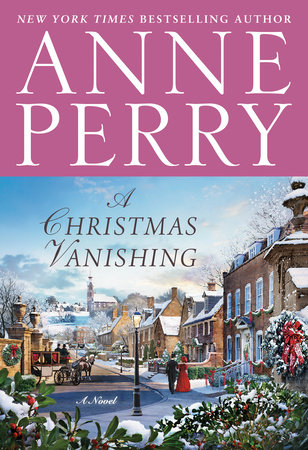
A Christmas Vanishing is the story of Mariah Ellison going to visit her friend Sadie Alsop and her husband Barton Alsop for the holidays. We are told Mariah is in her 80s. She had known Sadie for a very long time, but they had a falling out and she has not seen her for years. When Mariah gets to Sadie’s home in St. Helens in Dorset, she is nearly frozen and is looking forward to warming up. After several rings of the bell, Barton Alsop opens the door and tells Mariah, in not the friendliest of tones, that Sadie is not home, he doesn’t know when she will be home, and that she will have to leave. With that, he closes the door. Mariah has not been to St. Helens for years but asks the driver to take her to another old friend’s house, Annabel Spears, and her husband John. While they welcomed her to the house and provided warmth and afternoon tea, they also told her that she could not stay with them but arranged for her to stay with Annabel’s maiden sister, Gwendolyn. Mariah is very upset about where Sadie could be. Annabel tells Maraih that she saw Sadie the previous day and that Sadie was getting ready for Maraih’s visit.

Where could Sadie be? Had she forgotten Mariah was coming? Is she having memory issues? Is she outside in this terrible weather? Had her husband done something to her?

Mariah and Gwendolyn decide that they must find her, and they start talking to people in town. The talk turns into just gossip and Mariah can’t stand it. She goes into a bookstore and starts talking to the owner, Oliver. Mariah tells Oliver all about Sadie’s disappearance. Oliver shares with Mariah an experience that he had with Sadie that gives Mariah her first clue as to what could be wrong.

  After putting together pieces of the puzzle, they feel confident that they know why Sadie has disappeared, but they feel that they need to rush to find her before she dies from exposure. If, in fact, she is still alive.

So, I would say that it is not a Christmas book in that it brings in a lot of Christmas elements. It is a mystery that happens to take place at Christmastime. It could be read any time of the year and the Christmas element would not make any difference as it is not central to the theme.

It is a short book. I enjoyed it. Mariah is a flawed character who is looking for redemption. She was trying to better herself. I wondered if she was in other stories just because her backstory was referred to so often. It could just be the style.

I think it is worth a read – and not necessarily at Christmas.

Thanks for reading.

Posted in Talking Books | Tagged , , , | Leave a comment

The Fatal Folio by Elizabeth Penney

Dear Fellow Reader,

I was fortunate last week to go to an event at my library where a local author was reading excerpts of some of her books and talking about her process and experiences. If you can ever go to an author event, I urge you to go. First, there is something about the author reading their material that can give it a new spin on their book. They are the voice and sometimes it sounds different from what you hear in your head when you are reading. Also, there are sometimes explanations that go well beyond what you would think. Although this author did talk about how when her books are published, they are no longer hers. The stories become the story that you, the reader, see and it is sometimes different from what the writer sees. This same concept is found in Elizabeth Gilbert’s book Big Magic, where she tells of a woman coming up to her and saying that the book really inspired her to leave her abusive marriage because that is what Elizabeth Gilbert did in her book. But nowhere in the book or real life did Elizabeth Gilbert have an abusive marriage. The lesson is that an author is not responsible for what people read in their book.

Today we are talking about The Fatal Folio, a new book by Elizabeth Penney. Once again, I got caught agreeing to review a book that is not the first in the series. This one happens to be the third in Elizabeth Penney’s Cambridge Bookshop Series. Fortunately, these books do not need to be read in order. Phew!

Molly Kimball is an American living in Cambridge, England, and working in her family bookstore, Thomas Marlowe – Manuscripts and Folios. She has a boyfriend, Kieran Scott, and while she isn’t sure of the future of the relationship, she is sure that she loves his family library. His family hired her to update the catalog of the library. While working in the library, she finds the original manuscript of a Gothic novel entitled The Fatal Folio. The novel has been attributed to Selwyn Scott, but it is widely felt that the name is a pseudonym. But who wrote it?

Kieran’s cousin, Oliver, is a professor who specializes in Gothic literature, and he is eager to review and publish a paper on the mystery regarding the authorship of The Fatal Folio. This would help his cause at work because he is up for a big promotion. That promotion is in jeopardy because a student, Thad, has complained about him.

Later that evening, Molly is celebrating Guy Fawkes with Kieran when they come across a body slumped in the lane. It turns out to be Thad the student and he has been stabbed and dies. Who killed Thad and is there more to this than meets the eye.?

I really enjoyed this book. It is one of the better cozies that I have read lately. There were plenty of twists and turns and enough guilt to go around. Why would someone kill Thad.? Was it Oliver?

Thanks for reading!

Posted in Talking Books | Tagged , , , , , , , | 2 Comments

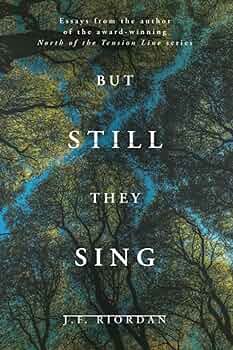
But Still They Sing by J. F. Riordan

Dear Fellow Readers,

There is a definite chill in the air. Fall seems to be upon us. I look out the window and see the green grass is dotted with yellow leaves. I am not sure that we will see the beautiful colors that I have seen in past years. The start of fall means that I have been burning candles more and we have had a couple fires in the fireplace.

Yep, that weather change is coming.

And so, this week, I will give you a change also. I know that I review mysteries most of the time interspersed with historical fiction or romance novels. Our something new this week is a book of essays.

I didn’t really decide that I needed to read a book of essays. I am not sure that essays would have caught my attention. So, why did I read this book? There are three reasons. I had read the author’s previous works. She has a 4-part series of fictional novels (soon to be 5), a children’s book, and this is her second book of essays. I have enjoyed her books and so I look forward to reading her works. Last but not least, she is a local author, and I have had the pleasure of meeting her at a few events.

At this point, I will remind you that if you have a chance to meet an author at a local event, go do it. Listen to them read their works. It is a fun fan experience and sometimes eye-opening. (When I heard Elizabeth Berg read from one of her books, I was amazed. When I was reading, I never heard that character’s voice with a Southern accent but apparently, I should have.)

But Still They Sing by J. F. Riordan has 42 short essays. The first essay, entitled, “They Sing”, is about the local fowl starting the morning with “their own language of song”.

The book has short essays about her dogs, her inspiration, her life, and nature. Each essay is short and well-written. Just enough to keep you wanting the next one. When I look at the book now, I have marked an essay entitled “The Paradox of Inspiration” and another, “Words for the Newlyweds”. I found “Words for the Newlyweds particularly thoughtful.

One of the things that I liked about the book is that you could put it down, read other books, and then pick it up again. Each essay is different and there is no reason that you have to read it in one sitting but it is hard to stop after just reading one or two. I found that I just kept reading.

I think you will enjoy this book and the others by J. F. Riordan. They are all a pleasure. The series, North of the Tension Line, takes place on Washington Island, which is in Wisconsin and the children’s book, My Dog Pete, is delightful. Her other book of essays is Reflections on a Life in Exile.

I have picked up two other books of essays because I enjoyed this book so much. We’ll see if I enjoy the others as much.

Enjoy your fall. May your pumpkins be easy to carve and your trick or treats all be treats.

Thanks for reading!

Posted in Talking Books | Tagged , , , , , | Leave a comment

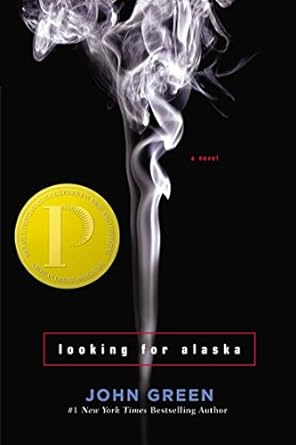
Looking For Alaska by John Green

Dear Fellow Readers,

“Books and ideas are the most effective weapons against intolerance and ignorance.” 

                                                                                                                  ― Lyndon B. Johnson

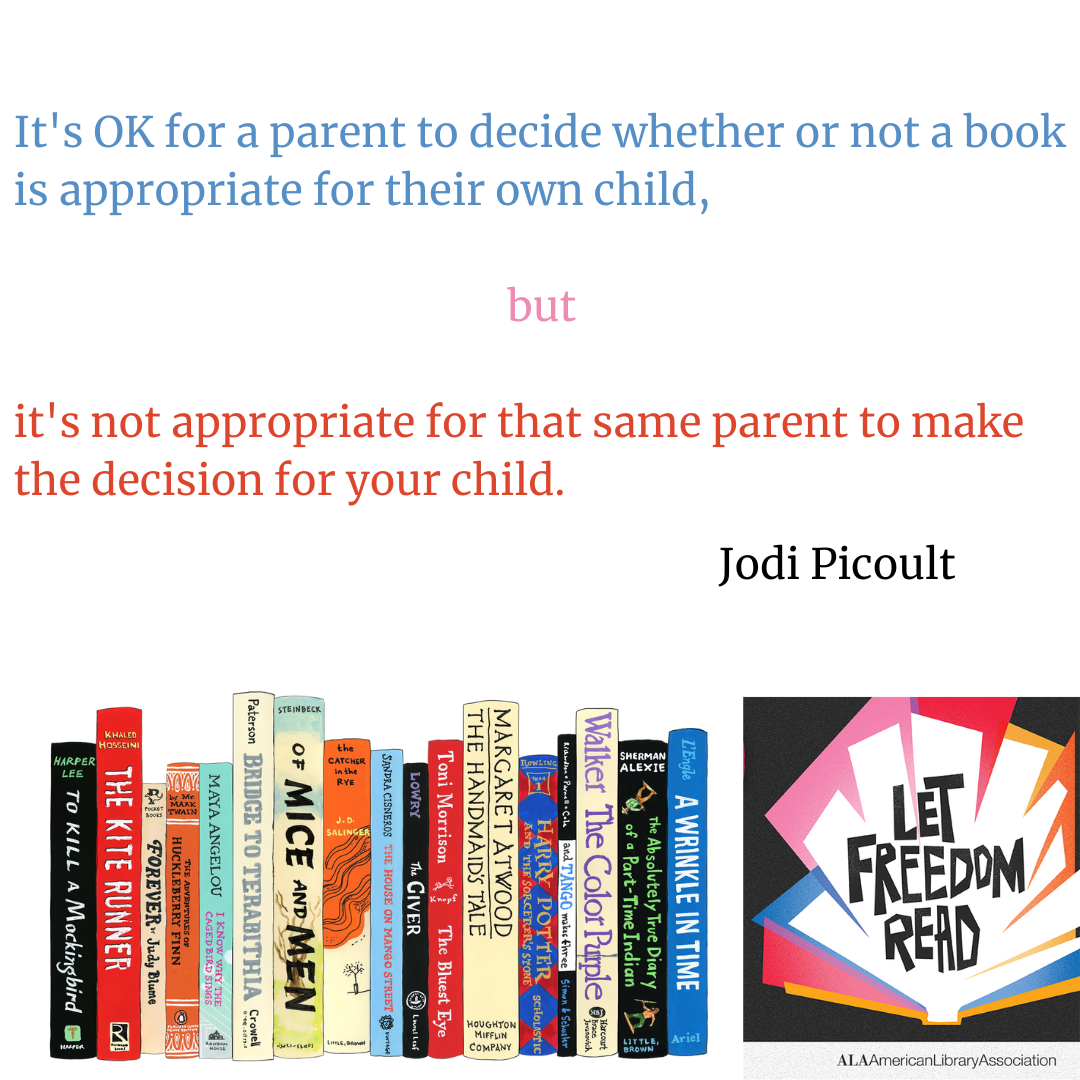
This week is Banned Book Week as “celebrated” by the American Library Association (ALA). I do take time each year to talk about the books that are being challenged or banned. This subject has gained a lot more attention in the last few years. A look at the numbers shows that from Jan. 1 – Aug. 31, 2023, challenges to books in public libraries accounted for 49% of those documented by the Office of Intellectual  Freedom (part of the ALA), compared to 16% during the same reporting period in  2022.

The top 13 most challenged books for 2022 are as follows:

Gender Queer by Maia Kobabe (I reviewed this book – https://cecooney.com/?s=gender+queer)

All Boys Aren’t Blue by George M. Johnson

The Bluest Eye by Toni Morrison

Flamer by Mike Curato

Looking for Alaska by John Green

The Perks of Being a Wallflower by Stephen Chbosky

Lawn Boy by Jonathan Evison

The Absolutely True Diary of a Part-Time Indian by Sherman Alexie

Out of Darkness by Ashley Hope Perez

A Court of Mist and Fury by Sarah J. Maas

Crank by Ellen Hopkins

Me and Earl and the Dying Girl by Jesse Andrews

I have read 6 of the 13 books. And I will continue to read these books.

This year in honor of Banned Books Week, I read Looking for Alaska by John Green. Miles Halter is going to be a junior in high school. He lives in Florida with his parents. He doesn’t really have any friends. He decides that he should go to Culver Creek boarding school and start seeking what he calls “The Great Perhaps”. Miles gets to the school, which is in Alabama. His first thought is that he should have checked it out more. He finds that his dorm room is not air-conditioned and that it is HOT in Alabama. Far hotter than Florida. He meets his roommate, Chip Martin, who is also a junior but unlike Miles, he has been at the school for three years. Chip takes him on a short tour of the school which includes picking up a ratty couch that belongs to Chip. Chip informs Miles that he should call him the Colonel and that Miles will have the nickname “Pudge” because he is so thin. (“It’s called irony, Pudge. Heard of it?”) The Colonel took Miles down to meet Alaska.

“I stared, stunned partly by the force of the voice emanating from the petite (but God, curvy) girl and partly by the gigantic stacks of books that lined her walls.”                                                                                                                          

Thus begins Miles’s crush on Alaska. Alaska is mercurial and smart and tragic.

Miles learns to smoke (which is against the rules) drink (which is really against the rules) and fall in love. His crush on Alaska is recognized by their little group but the Colonel frequently reminds him that Alaska has a boyfriend named Jake and that her relationship with Jake keeps her somewhat stable and he shouldn’t mess with it. The students play pranks on one another. There are two main groups. One group is the “homies”, those students who live in the area and go home every weekend, and then the other group that stays at the school all the time. The pranks are generally in retaliation for something that someone has done to offend the other group. But, not surprisingly, the major rule is not to ever “rat out” the person behind the prank.

The book opens with a page that simply says “before”. The first chapter heading is “one hundred thirty-six days before”. And the chapters count down from that point. So, there is a sense that something big is going to happen. And something big does happen. Then there is a cover page for “after” and the chapters count to “one hundred thirty-six days after”

The book is one year in the life of Miles at the boarding school. He probably learns a lot in school, but he also grows up during the year. I thought the book was well written and enjoyed it. I didn’t really think that it was unrealistic. Is it shocking that a 17-year-old boy would be interested in sex? That he might try smoking and drinking? No, and that hasn’t changed over the years.

I think by focusing on that, one misses the point of the book. The book is written for teenagers. Miles gives them someone to identify with. Miles is just a regular kid, and he has to learn about life just as we all do. The author lets teenagers know that it is okay that they don’t know what’s going on and that they will learn it over time. He also lets them know that terrible things can happen, but that growth can come from those events too. I think that books should be available to teens to show them that they are okay. That they are not alone in their thinking or actions. That their life will be okay. That they will make it.

And I think that is the problem with trying to remove books. First off, I don’t think they are as innocent as some parents like to think. There are so many influences swirling around kids from the internet to their friends to video games and television. Kids are not the same as when I was a child (in the dark ages) or even when my kids were kids. If, in their reading, they only see some sanitized version of life, then when they don’t fit that version, what will they think? What will they be saved from? From thinking that they are some oddball? Wouldn’t it be better for them to have a character who is thinking or feeling the same things that they are that shows them that you can make it through? So much better to know there are others out there than thinking that you are alone.  

Have I liked all the challenged books that I have read? No, I haven’t.  As with all books, there are some of them that I don’t like the writing style.  The content was interesting even though I didn’t like the presentation.  But fortunately, we all have different tastes and will appreciate different books.  Some of the books have been tough to read.  The subject matter can be hard but because life can be hard. But it was always interesting to read a different perspective. Even the ones I didn’t like had something for me to learn.

I talked to a parent once who was complaining about a book that her daughter had to read in school.  She claimed that her daughter came to her to complain about a passage in the book.  She read the passage and went to the teacher to complain about the book.  She was feeling pretty self-righteous.  She even said that she had read the entire book.  I asked her if she had asked the teacher why the book was on the reading list. She was shocked by my question.  I would think that was the important question. So there was one paragraph in a 200+ page book that seemed to offend but when you looked at the entire book, was there a benefit?  (I will admit that I also thought she was being conned by her teenager, but it didn’t seem to be a valuable point to make right then.) But shouldn’t the question be “Why was this book chosen?”  There is a reason and that can be the key.  Maybe listening to the trained professionals is a worthwhile thing to do.

“I believe that censorship grows out of fear, and because fear is contagious, some parents are easily swayed. Book banning satisfies their need to feel in control of their children’s lives. This fear is often disguised as moral outrage. They want to believe that if their children don’t read about it, their children won’t know about it. And if they don’t know about it, it won’t happen.

Today, it’s not only language and sexuality (the usual reasons given for banning my books) that will land a book on the censors’ hit list. It’s Satanism, New Age-ism and a hundred other isms, some of which would make you laugh if the implications weren’t so serious. Books that make kids laugh often come under suspicion; so do books that encourage kids to think, or question authority; books that don’t hit the reader over the head with moral lessons are considered dangerous.”

                                                                                                                                                      Judy Blume

Thanks for reading.

Posted in Talking Books | Tagged , , , , , | Leave a comment

Case of the Bleus: A Cheese Shop Mystery by Korina Moss

Dear Fellow Reader,

Fall is creeping its way into this area of the Midwest. It is getting cooler, and the leaves are starting to turn. I love it. I do enjoy the warmth of summer after winter and spring but come fall, I’m ready to get out the sweaters and curl up. It seems to me that it is warmer than usual for the end of September but it does cool off fast once the sun starts setting. Not yet time for a warming fire in the fireplace though.

I happened to look at the notebook where I keep a list of titles I want to read. That list is long. My first inclination is to try and organize the list so that I can go through the list methodically. But then the other side of my brain says that is not the way to read books. Read what you want to read. My list is diverse – I have a desire to read all different kinds of books. Somehow arranging the books in some sort of order seems like useless work. I tend to want to read something but if the spirit passes, I am hard-pressed to bring it back.

I was going to spend the summer reading Alice Hoffman’s books. I had only read a couple of her books and thought I should read more. As they say, the road to Hell is paved with good intentions. My reading does not always follow my aspirational goals. We have had some stressful times over the last few months and I find I take cover in cozy mysteries. Somehow, I started reading Patricia Wentworth’s Miss Silver series. There are 32 of them. The first book came out in 1928 and the last one in 1961. I seem to just keep clicking through them. I think I have 9 left. They are older mysteries and I like to see the difference in the style between then and now.

But today we are looking at Case of the Blues: A Cheese Shop Mystery. This is book 4 in the series. I had no idea when I said that I would review this book that it was the 4th in the series. You know I hate reading series out of order, but I will say that I don’t think there was anything that I missed by starting at the 4th book. I understood what was going on. So, don’t let that deter you from reading this book.

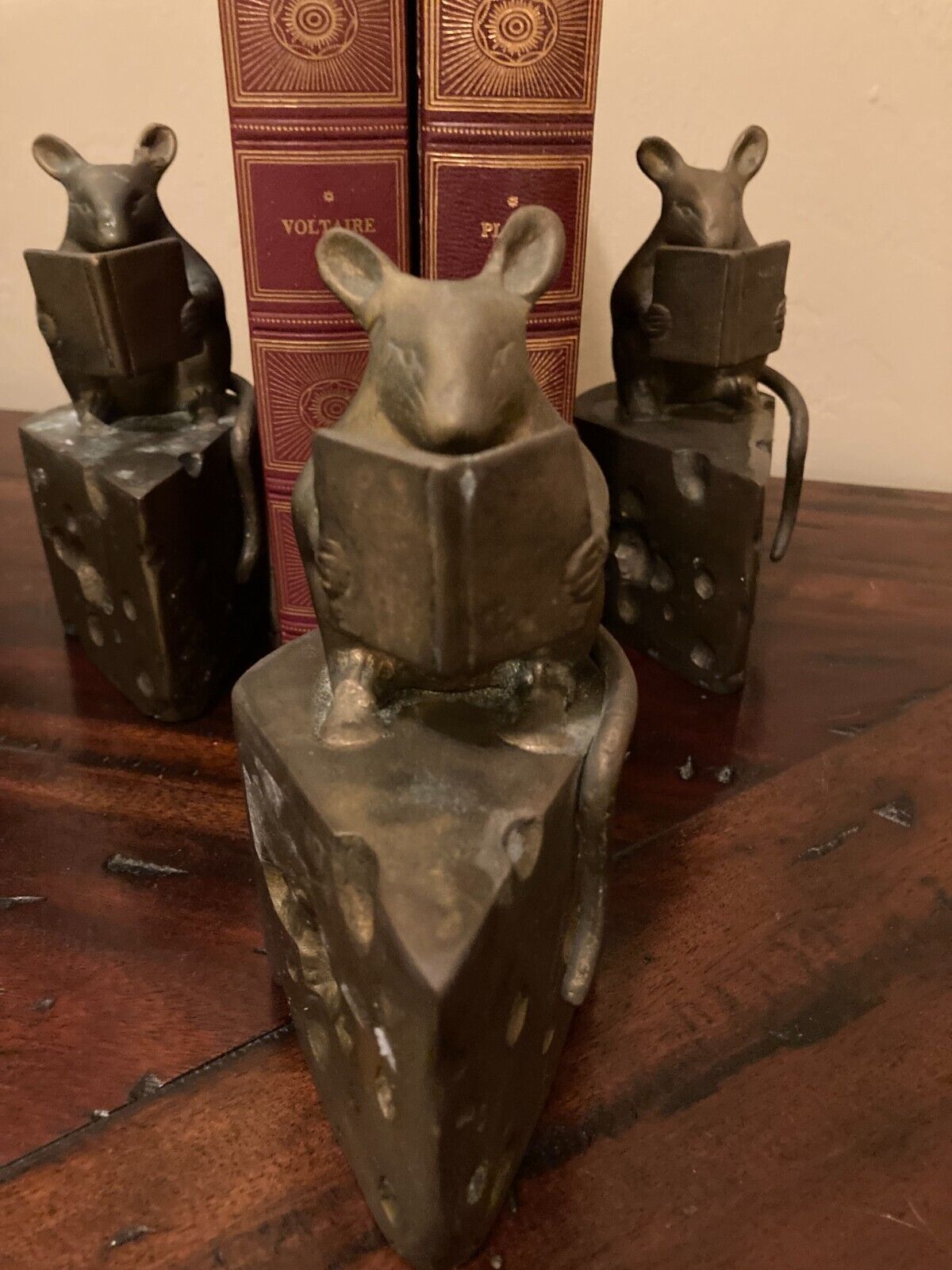
As you might guess from the title, this book takes place in a cheese shop. Willa Bauer’s store, Curds and Whey, is fairly new; she learned the ropes while working in a cheese shop under the tutelage of Max Dumas, a legend in the world of cheese. The Northwest Cheese Invitational Festival is in her town and there is a tribute to the recently departed Max Dumas as part of the festival.

It seems that in the year or so since Willa left Max’s cheese shop, several important things have happened. The first is that Max had developed a blood disease that was getting worse and had his staff worried about his health. Then he was in a car accident that claimed his life. Prior to the accident, Max had reconnected with his long-estranged daughter.

The reading of Max’s will was going to take place on the second day of the Cheese Festival. That would answer two questions that were up in the air. Who would inherit the cheese store and who was going to inherit the recipe for the famous Church Blue cheese that Max had kept as a closely held secret. There seemed to be an assumption that Max’s daughter would inherit the store but that Kendall, his assistant, receive the secret to the cheese.

But when the will was read, it did not disclose who would have the recipe for the cheese. With that mystery still over their heads, the four people who worked for Max along with Willa and her staff went over to have a picnic at the festival.

While at the picnic, Kendall drinks a glass of wine and goes into anaphylactic shock. While looking for her Epi pen, Willa finds that it isn’t in Kendall’s purse although it was just a couple of hours before.

Who would have wanted to kill Kendall?  And why was Kendall seen coming out of Willa’s apartment? The mysteries start compounding. Who is the mysterious good-looking stranger?  What will happen to Max’s shop now that his daughter has inherited it?

I found that the plot of the book moved at a good pace. While some things became evident while I read, I thought the book gave enough hints but not too many. I don’t try to solve mysteries when I am reading them. I did see the “who done it” in this one. That is not bad. I enjoyed the book. I think it is a worthy addition to your “to be read” pile.

Thanks for reading!

Posted in Talking Books | Tagged , , , , | Leave a comment