The Last Note of Warning by Katharine Schellman

Dear Fellow Reader,

Happy June! For the first time in a while, it feels like we had Spring. Gardens were up and going earlier than normal and the lilacs are spent and back to being green bushes. It is always so great to go back to longer days. Remember when you were young and had to go to bed when it was still light out?

Bed in Summer

In winter I get up at night

And dress by yellow candle-light

In summer, quite the other way,

I have to go to bed by day.

I have to go to bed and see

The birds still hopping on the tree,

Or hear the grown-up people’s feet

Still going past me in the street.

And does not seem hard to you,

When all the sky is clear and blue,

And I should like so much to play,

To have to go to bed by day?

Robert Louis Stevenson 1850-1894

Last July, I reviewed The Last Drop of Hemlock by Katherine Schellman. (https://cecooney.com/2023/07/10/the-last-drop-of-hemlock-by-katharine-schellman/)

It was the second book in a series that featured Vivian Kelly as the main character. (I still haven’t read the first book.) The books take place in Manhattan in 1925. Vivian works for a seamstress during the day making deliveries and then at night she works in a speakeasy.
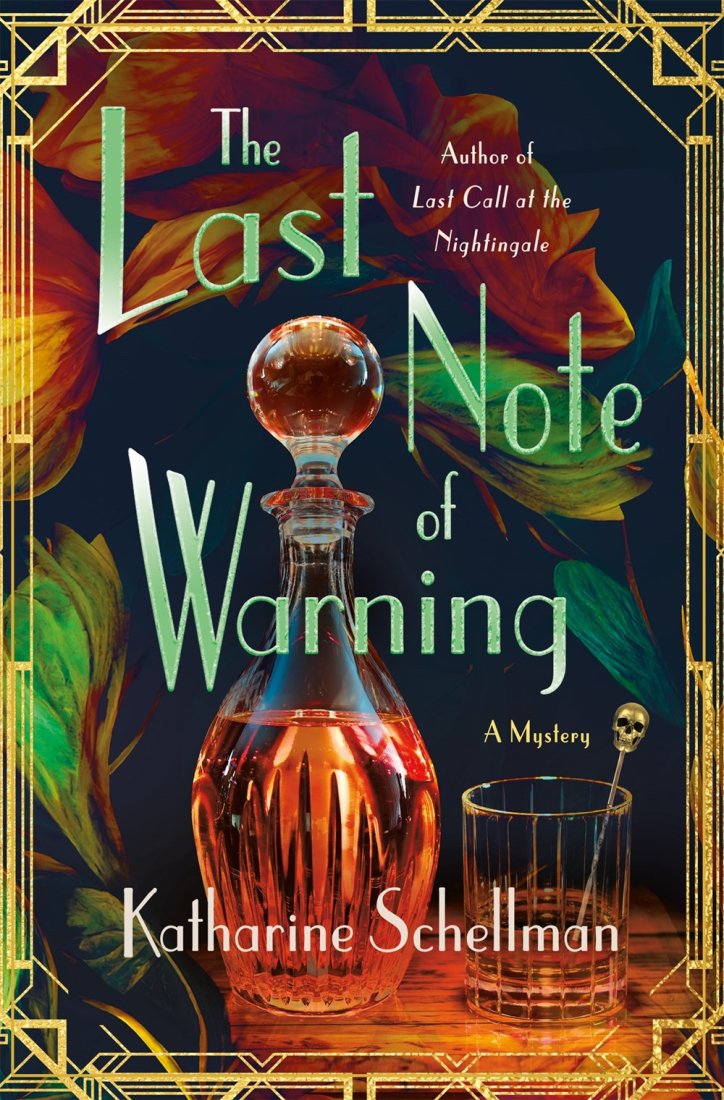
In The Last Note of Warning, we meet Vivan as she is delivering a dress to Mrs. Buchanan. She is to deliver the dress and make sure the dress fits perfectly. When she arrives at the house, Mrs. Buchanan is not there so she is told to wait. While waiting she meets Mr. Buchanan. They exchange some pleasantries, and he gets Vivian a cup of coffee. He is then called to meet a guest in his office by a maid. Vivian is tired from her long nights at the Nightengale and while waiting falls asleep. She wakes and knows that she needs to get back to work. She goes in search of someone to say that she is leaving. She finds Mr. Buchanan dead in his study. The police come and she is blamed for his murder. She contacts Leo Green, her beau, to help her since his uncle is the Police Commissioner. The Commissioner tells her she has one week to find the murderer, or she will go to jail for the crime. Vivan goes back to the Nightingale to enlist Honor Huxley’s help. Honor owns the Nightengale and has connections that Vivian thinks can help her. Vivian turns her down and says that this time she can’t help. Vivian is hurt by this refusal, but the clock is ticking and she needs to find out why Mr. Buchanan was murdered and by whom? Was it his new wife? Her gambler son (from a previous marriage)? And who was slowly poisoning Mr. Buchanan? And why weren’t the cops looking for the maid that Vivian said came and got Mr. Buchanan for a meeting?

Nothing was falling into place. Vivian couldn’t run away – the commissioner told her he would go after her sister, Florence if she disappeared. It truly looked like she was going to go to jail.

I enjoyed this book. There are enough twists and turns to keep you trying to figure out how Vivian will be saved. And she has to be, right? I think it is a great addition to your TBR pile. And someday I will read the first book.

Thanks for reading!

Posted in Talking Books | Tagged , , , , , , , , , | 1 Comment

Shelterwood by Lisa Wingate

Dear Fellow Reader,

Here we are in June. The summer seems full of endless possibilities, right? I keep putting schedules of outdoor concerts and events up on the bulletin board. In theory, I would love to attend lots of outdoor concerts and events. In reality, if it is hot and humid or it looks like massive crowds will be there, I lose interest fast. Quiet nights on the deck with my music gently playing sound good. I can, unfortunately, get lazy fast and then wonder what happened to the summer.

Oh…

I read Lisa Wingate’s Before We Were Yours several years ago and enjoyed it. The story captured my interest and I enjoyed it. So, when I was offered an advance copy of Shelterwood, Lisa Wingate’s new book, I was happy to read it.

Shelterwood has two main characters who occupy different times. Olive Augusta Radley lived in Oklahoma in 1909. Valerie Boren-Odell lived in Oklahoma in 1990.

As the story starts, Ollie is running away from home with Nessa. Nessa and her older sister Hazel were living with Ollie, her mother, and her father. Ollie’s father has died and her mother and the girls are living with Tesco Peele. Ollie’s mother is strung out on booze and drugs most of the time and Ollie does not trust Tesco Peele. After Hazel disappears, Ollie decides that she needs to get Nessa and herself away from their new home. Her thought is that she and Nessa will go up in the hills to a cabin that her father had. Through the story, we follow their attempt to get away.

The other half of the story is about Valerie who is a single mother and has just arrived as a Ranger in the new Hoursethief Train National Park in Oklahoma’s Winding Stair Mountains. New to the area and job, she is not being given much respect as a woman Ranger. As the story opens she is out on the trail and meets Sydney, a young girl who has a lot to say and a Tribal Officer who knows Sydney and sends her back to her church group. The Tribal Officer then mentions something about bones being found – three little girl’s bones. When Valerie admits that she hasn’t heard, he shrugs and leaves. Sydney tells Valerie that her brother is missing and that Valerie should look for him. He is 17 and has red hair. Valerie can tell from the way the girl talks that there are some family issues going on but she wants to find out more about the bones that were found. Her boss does not assign her to find out and points her to some menial work. Before she knows it she is looking for Sydney’s brother and not finding anything that makes sense. It doesn’t help that when she talks to Sydney she needs to try and decide between the lies and the truth that come out of Sydney’s mouth.

The stories twist and turn separately and you wonder how it will come together. Both stories tell of the mistreatment of children and disregard of the law by prominent citizens. The story does come together at the end.

I did like this book but I will say it took me a while to read it. I did not find it to be a “real page turner”. I read several books while I was reading this book. But in its favor, I easily knew what was going on whenever I picked it up. The story stayed with me even when I read other books. I think that is a positive thing. I think you should put this on your TBR pile. I think you will enjoy it.

Thanks for reading!

Posted in Talking Books | Tagged , , , | Leave a comment

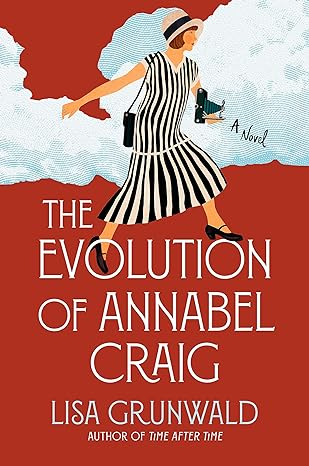
The Evolution of Annabel Craig by Lisa Grunwald

Dear Fellow Readers,

I am not a student of history. Dates and places for the most part do nothing for me. Perhaps that is my problem with historical fiction. To be honest and embarrass myself simultaneously, I was shocked when I learned that World War II ended in 1945. 1945 was not that long ago. Or more specifically, it wasn’t that long before I was born. When I see things about it, I always thought it was so long ago.

With that in mind, do you know what was happening in Dayton, Tennessee, in 1925? I would not have had any idea. Nor could I have told you much about it even if I knew the answer.

In her new book, The Evolution of Annabel Craig, Lisa Grunwald tells us the story of Annabel Hayes Craig. Annabel was raised by loving parents who died as part of the Spanish flu epidemic. At 16, Annabel was left on her own in her hometown of Dayton, Tennessee. She finished high school and started working. Then she met George Craig, a lawyer who had moved to Dayton from Knoxville. He was so loving and fun; she was completely in love. They married and things were fine for the first year. Yes, he might have had a few little quirks but doesn’t everyone? When they encountered some setbacks, the relationship hit an iceberg of problems.

It was 1925 and Annabell was in the back of the drugstore in Dayton having a soda and looking at the pictures she had developed when she overheard the big shot men of Dayton at one of the tables planning something. It seems there was a new law, the Butler Act, and they wanted there to be a court case to test the Act and they wanted it in Dayton to reap the publicity and any money that could be involved with the trial. They pulled in the new football coach, who had substituted teaching biology a few times. They told him they would pay any fines he received if he went on trial for teaching evolution. He agreed. So, John Scopes was arrested.

And that was how the Scopes Trial started.

The Butler Act prohibited teaching evolution in schools; only the Bible view was allowed. Dayton was a Bible town. For the most part people in town either went to the Baptist church or the Methodist-Episcopalian church. And they went every Sunday and knew their Bible. Wanting to go against the Butler Act was unacceptable.

The effect of this trial on the town and on Annabel’s life was significant. At the end of the trial, Annabel was only 23 years old, but she had learned more about her husband, town, and herself than most people in the town would ever learn.

Knowing just the absolute minimum about the Scopes Trial, I found it interesting. There was truly an evolution for Annabel. She was an interesting character, and I felt the author supplied historical information that was also interesting.

My only problem with the book was several instances where the author would hint about Annabel’s future life, but that future life was not in the book. I don’t know if she was paving the way for the next book, but I found it distracting.

But I did like the book. I would recommend it both for the story and the historical information. Annabel was a likable character. During her personal trials, I never wanted to yell at her for what she thought or did. She was a well-written character.

 I was given a copy of this book in exchange for my honest opinion. This book will be published on April 16, 2024.

Thanks for reading.

Posted in Talking Books | Tagged , , , , , , , | Leave a comment

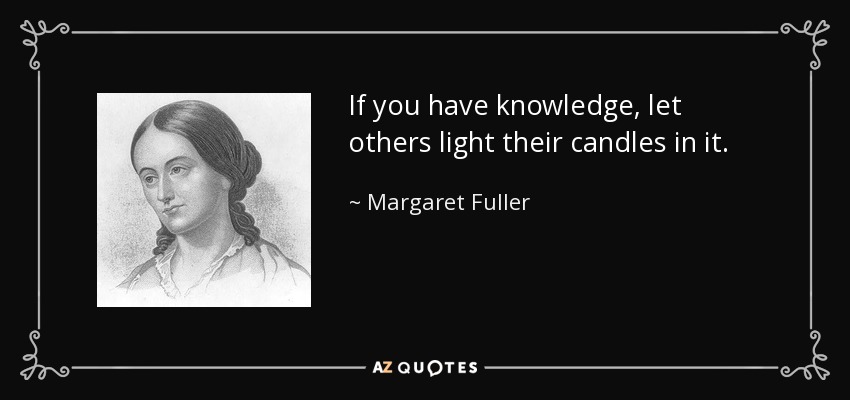
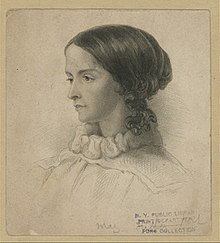
Finding Margaret Fuller by Allison Pataki

Dear Fellow Reader,

Happy Spring!  I know I am a bit ahead of myself by saying that, but I want to push the season. I want to be warm, work in the yard, and stop wearing 3 shirts at a time. (Give me a break. I seem to run cold.)

Back in February of 2022, I reviewed a book by Allison Pataki. The name of the book was The Magnificent Lives of Marjorie Post. (https://cecooney.com/?s=Allison+Pataki) I enjoyed the book and when I saw a new book by Allison Pataki, I was eager to read it. I had heard of Marjorie Post when I read the book about her but with the new book, Finding Margaret Fuller, I had never heard of Margaret Fuller.

Margaret Fuller was a real person. Let me stop here and suggest that you not do what I did. I looked up Margaret Fuller and read about her. It was a mistake. It affected my reading of the book. Finding out about her from the book would have been much better. I still enjoyed the book, but it would have been better if I didn’t know the story of her life.

With that as a proviso, let me give you a little bit about Margaret Fuller’s life. Margaret Fuller was a beautiful, educated woman. When the book opens, she meets Ralph Waldo Emerson for the first time.

“The Most Well-Read Woman in America,” he says with a flourish of his long-finger hands, then he sets his gaze back on me.” That’s what they call you if I’m not mistaken?”

“Person,” I reply, my voice quiet but certainly audible.

Emerson tilts his head, eyeing me with a bemused expression. “Pardon?”

“Person,” I state again, this time just slightly louder. “What I’ve been called is ‘the Most Well-Read Person in America.’”

Margaret Fuller’s father was her teacher. He taught her Latin, Greek, and everything he would have taught a son. At the time, daughters were not taught the same as sons. Daughters were educated to be ladies while sons were educated. As a result, Margaret could translate Goethe from German and speak several languages. She was taught to think and analyze what she read and heard.

Margaret Fuller was part of the Transcendentalist movement which started in 1836. She was friends with Ralph Waldo Emerson, Henry David Thoreau, Bronson Alcott, and Nathaniel Hawthorne. She went on to meet Edgar Allen Poe, George Sand, Fredrick Chopin, and Elizabeth Barrett Browning.

The story is interesting and timeless. Margaret Fuller’s beliefs are still pertinent these days. She believed in equality. She believed in freedom and respect for all people.

Yes, I recommend this book. I enjoyed reading it. She was an important person in her time and she has been forgotten. Her history is fascinating. BUT DON’T RUIN IT AND READ ABOUT HER BEFORE READING THE BOOK.

I was given a copy of the book in exchange for my honest review.

Thanks for reading!

Posted in Talking Books | Tagged , , , , , , , , | Leave a comment

The Underground Library by Jennifer Ryan

Dear Fellow Reader,

Welcome to March!  A month of madness? That seems to be what it is famous for but this year it has so much more – Spring Forward, St. Patrick’s Day, Easter – a whole cornucopia of spring!  Get out the patent leather shoes! 

Meanwhile, I am sitting here warming my hands on a cup of tea!  It is sometimes hard to overcome the damp, cold here in the Midwest.

I am happy to tell you about this week’s book. It is the fifth book by Jennifer Ryan. No, they are not a series, but all take place in England during World War II. I know I read The Wedding Dress Sewing Circle and I think I read The Chilbury Ladies’ Choir. So, let’s break convention here and tell you that I like these books. Yes, I know that I profess to be sick of historical fiction. And in some ways, I am. But these books are really character-driven. While the historical background is there, these characters are living in the setting, they aren’t there to support the setting.

The Underground Library has three main characters and several supporting characters. Juliet Lansdown has left her parents and hometown to move to the Bethnal Green section of London to work at the library there. She had worked at the library in her hometown and loved it. She has hopes that it will be even better in Bethnal Green. Katie Upwood works at the library for the summer before she goes to the University. She is only allowed to study at the University because so many of the students are off to war, but she is bright and can’t wait to go. Sofie Baumann, is a refugee from Germany. She has come to Bethnal Green to be a domestic worker – the only way she could get out of Germany. She is not in a good situation but the day she comes to the library, she finds friends and support.

Soon into the story, the Germans start bombing London and each night the residents must leave their homes and go to shelter. The Underground soon becomes the shelter of choice. When the library is bombed, the friends gather around and move books to the Underground. Juliet starts some programs that become extremely popular like a time each night for reading aloud and eventually a school.

Our three main characters each face choices they never could have anticipated and despite rocky times, they find that their friendships keep them floating in the sea of hard times.

I was given an advance copy of this book in exchange for an honest review. The book will be published on March 12th.

Posted in Talking Books | Tagged , , , , , , , , , | Leave a comment