Dear Fellow Readers,
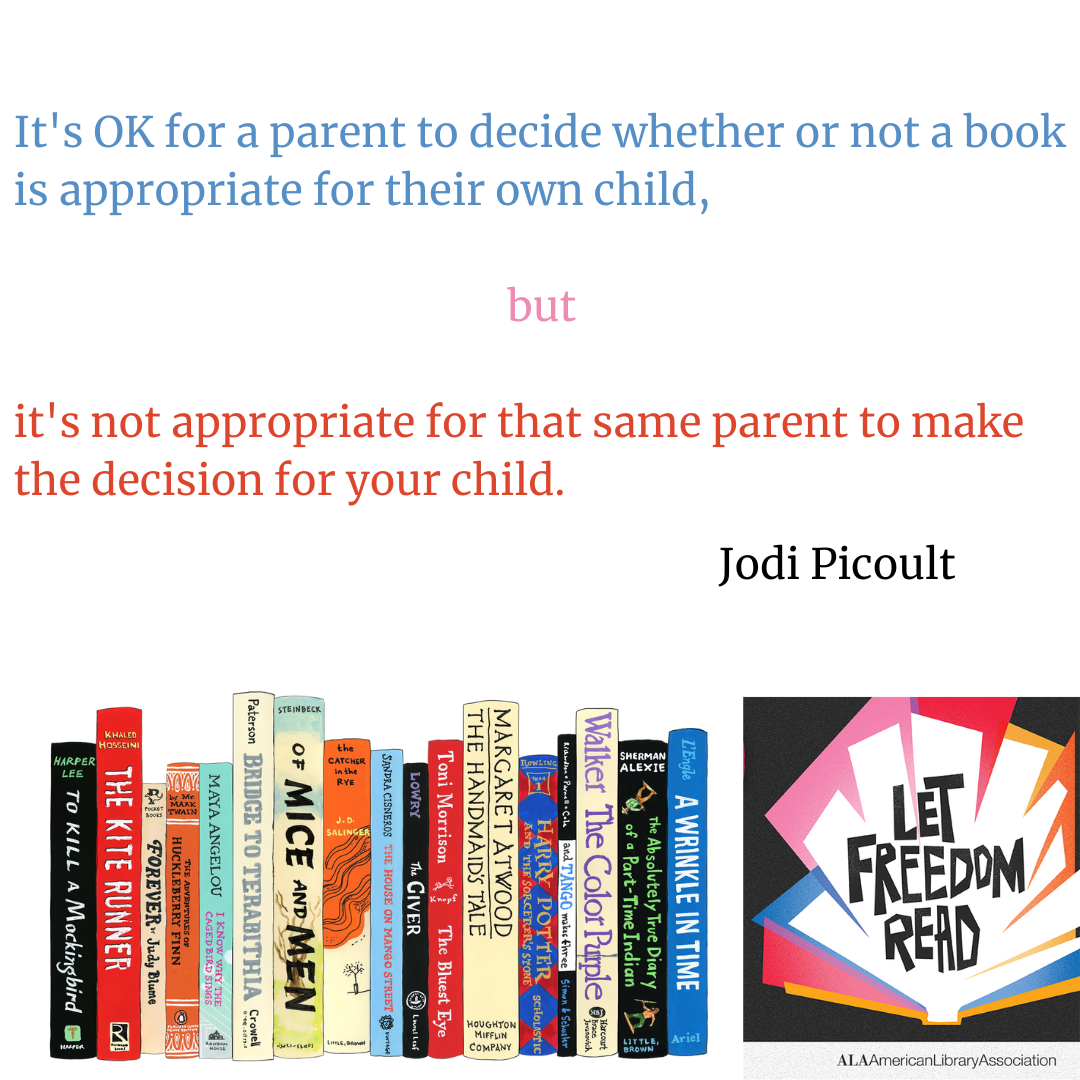
“Books and ideas are the most effective weapons against intolerance and ignorance.”
― Lyndon B. Johnson
This week is Banned Book Week as “celebrated” by the American Library Association (ALA). I do take time each year to talk about the books that are being challenged or banned. This subject has gained a lot more attention in the last few years. A look at the numbers shows that from Jan. 1 – Aug. 31, 2023, challenges to books in public libraries accounted for 49% of those documented by the Office of Intellectual Freedom (part of the ALA), compared to 16% during the same reporting period in 2022.
The top 13 most challenged books for 2022 are as follows:
Gender Queer by Maia Kobabe (I reviewed this book – https://cecooney.com/?s=gender+queer)
All Boys Aren’t Blue by George M. Johnson
The Bluest Eye by Toni Morrison
Flamer by Mike Curato
Looking for Alaska by John Green
The Perks of Being a Wallflower by Stephen Chbosky
Lawn Boy by Jonathan Evison
The Absolutely True Diary of a Part-Time Indian by Sherman Alexie
Out of Darkness by Ashley Hope Perez
A Court of Mist and Fury by Sarah J. Maas
Crank by Ellen Hopkins
Me and Earl and the Dying Girl by Jesse Andrews
I have read 6 of the 13 books. And I will continue to read these books.
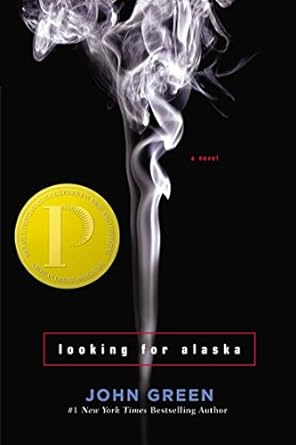
This year in honor of Banned Books Week, I read Looking for Alaska by John Green. Miles Halter is going to be a junior in high school. He lives in Florida with his parents. He doesn’t really have any friends. He decides that he should go to Culver Creek boarding school and start seeking what he calls “The Great Perhaps”. Miles gets to the school, which is in Alabama. His first thought is that he should have checked it out more. He finds that his dorm room is not air-conditioned and that it is HOT in Alabama. Far hotter than Florida. He meets his roommate, Chip Martin, who is also a junior but unlike Miles, he has been at the school for three years. Chip takes him on a short tour of the school which includes picking up a ratty couch that belongs to Chip. Chip informs Miles that he should call him the Colonel and that Miles will have the nickname “Pudge” because he is so thin. (“It’s called irony, Pudge. Heard of it?”) The Colonel took Miles down to meet Alaska.
“I stared, stunned partly by the force of the voice emanating from the petite (but God, curvy) girl and partly by the gigantic stacks of books that lined her walls.”
Thus begins Miles’s crush on Alaska. Alaska is mercurial and smart and tragic.
Miles learns to smoke (which is against the rules) drink (which is really against the rules) and fall in love. His crush on Alaska is recognized by their little group but the Colonel frequently reminds him that Alaska has a boyfriend named Jake and that her relationship with Jake keeps her somewhat stable and he shouldn’t mess with it. The students play pranks on one another. There are two main groups. One group is the “homies”, those students who live in the area and go home every weekend, and then the other group that stays at the school all the time. The pranks are generally in retaliation for something that someone has done to offend the other group. But, not surprisingly, the major rule is not to ever “rat out” the person behind the prank.
The book opens with a page that simply says “before”. The first chapter heading is “one hundred thirty-six days before”. And the chapters count down from that point. So, there is a sense that something big is going to happen. And something big does happen. Then there is a cover page for “after” and the chapters count to “one hundred thirty-six days after”
The book is one year in the life of Miles at the boarding school. He probably learns a lot in school, but he also grows up during the year. I thought the book was well written and enjoyed it. I didn’t really think that it was unrealistic. Is it shocking that a 17-year-old boy would be interested in sex? That he might try smoking and drinking? No, and that hasn’t changed over the years.
I think by focusing on that, one misses the point of the book. The book is written for teenagers. Miles gives them someone to identify with. Miles is just a regular kid, and he has to learn about life just as we all do. The author lets teenagers know that it is okay that they don’t know what’s going on and that they will learn it over time. He also lets them know that terrible things can happen, but that growth can come from those events too. I think that books should be available to teens to show them that they are okay. That they are not alone in their thinking or actions. That their life will be okay. That they will make it.
And I think that is the problem with trying to remove books. First off, I don’t think they are as innocent as some parents like to think. There are so many influences swirling around kids from the internet to their friends to video games and television. Kids are not the same as when I was a child (in the dark ages) or even when my kids were kids. If, in their reading, they only see some sanitized version of life, then when they don’t fit that version, what will they think? What will they be saved from? From thinking that they are some oddball? Wouldn’t it be better for them to have a character who is thinking or feeling the same things that they are that shows them that you can make it through? So much better to know there are others out there than thinking that you are alone.
Have I liked all the challenged books that I have read? No, I haven’t. As with all books, there are some of them that I don’t like the writing style. The content was interesting even though I didn’t like the presentation. But fortunately, we all have different tastes and will appreciate different books. Some of the books have been tough to read. The subject matter can be hard but because life can be hard. But it was always interesting to read a different perspective. Even the ones I didn’t like had something for me to learn.
I talked to a parent once who was complaining about a book that her daughter had to read in school. She claimed that her daughter came to her to complain about a passage in the book. She read the passage and went to the teacher to complain about the book. She was feeling pretty self-righteous. She even said that she had read the entire book. I asked her if she had asked the teacher why the book was on the reading list. She was shocked by my question. I would think that was the important question. So there was one paragraph in a 200+ page book that seemed to offend but when you looked at the entire book, was there a benefit? (I will admit that I also thought she was being conned by her teenager, but it didn’t seem to be a valuable point to make right then.) But shouldn’t the question be “Why was this book chosen?” There is a reason and that can be the key. Maybe listening to the trained professionals is a worthwhile thing to do.
“I believe that censorship grows out of fear, and because fear is contagious, some parents are easily swayed. Book banning satisfies their need to feel in control of their children’s lives. This fear is often disguised as moral outrage. They want to believe that if their children don’t read about it, their children won’t know about it. And if they don’t know about it, it won’t happen.
Today, it’s not only language and sexuality (the usual reasons given for banning my books) that will land a book on the censors’ hit list. It’s Satanism, New Age-ism and a hundred other isms, some of which would make you laugh if the implications weren’t so serious. Books that make kids laugh often come under suspicion; so do books that encourage kids to think, or question authority; books that don’t hit the reader over the head with moral lessons are considered dangerous.”
Judy Blume
Thanks for reading.






 Carol Early Cooney